Are you drawn to the idea of living in the middle of Downtown Ventura, but unsure what terms like loft, condo, and live-work actually mean? You are not alone. These property types can look similar at first glance, yet they can differ in layout, rules, and long-term fit. This guide will help you understand how Downtown Ventura lofts and live-work homes work, what trade-offs to expect, and what to review before you buy. Let’s dive in.
Downtown Ventura living at a glance
Downtown Ventura is planned as the city’s walkable, mixed-use core. The City describes it as a place for housing, jobs, retail, entertainment, and public gathering spaces, with a form-based code that supports a more connected urban environment.
The broader vision for downtown also points toward expanded transit and bike access to make living without a car easier and more affordable. For you as a buyer, that means downtown housing is tied closely to lifestyle. You are not just buying square footage. You are buying proximity, convenience, and a more urban daily rhythm.
What a loft usually means
In Downtown Ventura, the city materials are clearer about live-work housing than about a separate official loft category. So the safest way to understand a loft here is as the more open-plan, residential-first end of the attached-housing spectrum.
In practical terms, a loft often suggests an open layout, fewer interior divisions, and a design that prioritizes residential living over commercial use. If you want a home that feels flexible and modern without the added complexity of running a business from the property, a loft-style residence may be the closer match.
What a condo usually means
A condo is generally the most familiar attached-housing product. It is typically part of a homeowners association, or HOA, with shared rules, shared maintenance obligations, and common-area oversight.
That structure can appeal to buyers who want a lower-maintenance lifestyle in a central location. At the same time, condo ownership usually comes with more documents to review, including budgets, reserve information, rules, insurance details, and any limits on pets, rentals, or parking.
What a live-work home means
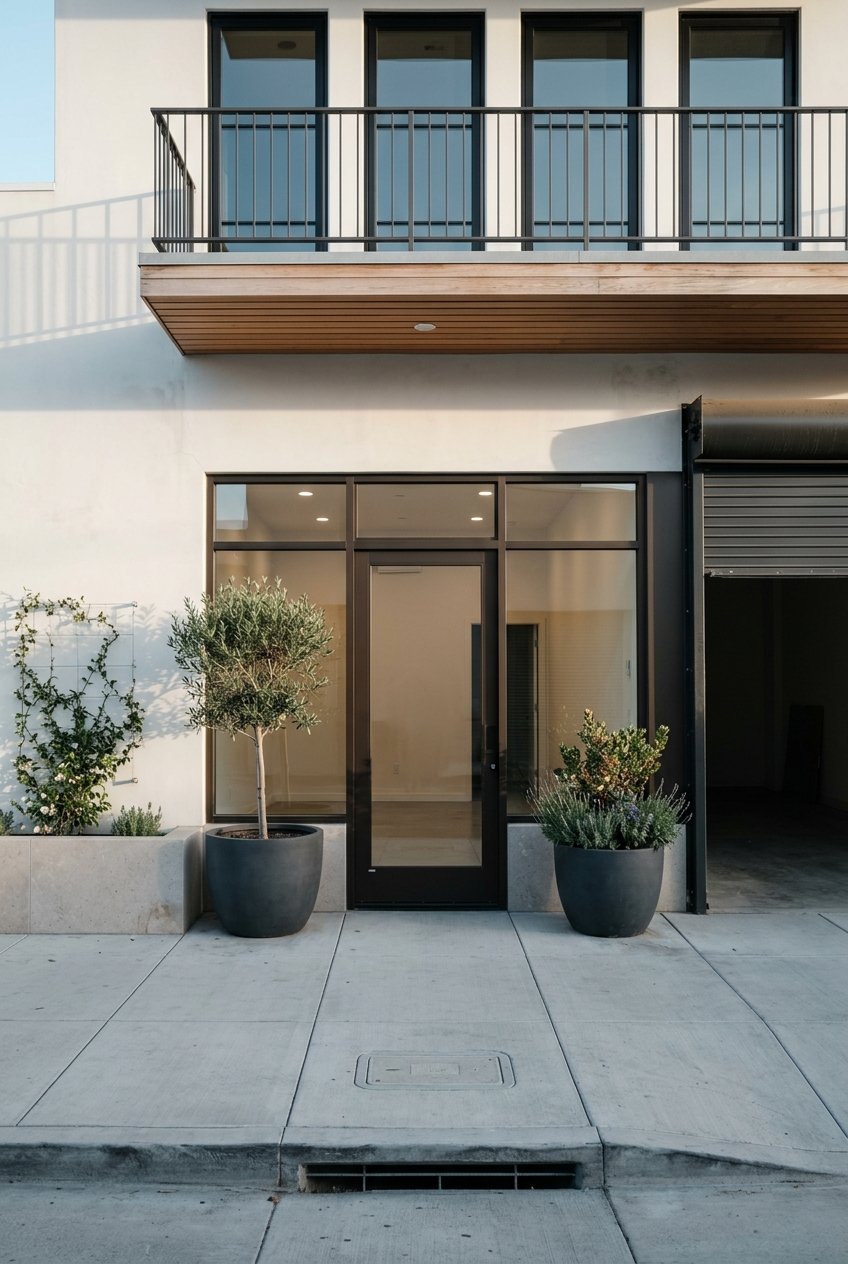
A live-work unit is the most clearly defined mixed-use option in Downtown Ventura. Ventura’s building standards describe it as an integrated housing-and-work space with ground-floor flex or work space and residential access above, arranged so occupants do not have to pass through the work area to reach the living space.
The standards also call for usable outdoor space behind the building. In mixed-type development, parking and services are often pushed to alleys or subterranean garages, which helps maintain a more active street-facing design.
Why live-work is different from loft living
The key difference is intent. A loft is generally residential first, while a live-work unit is intentionally designed around a relationship between living space and work space.
That does not mean any business use is automatically allowed. If you plan to operate a business from the property, Ventura requires zoning clearance to confirm what use is permitted. In other words, a live-work unit is not a blanket approval for every type of commercial activity.
How Downtown Ventura shapes these homes
Downtown Ventura’s planning framework gives useful clues about what you can expect from the housing stock. The Downtown Specific Plan allows live-work as a building type across the plan area, which shows that this is a real and intentional part of the downtown mix, even if it remains a niche product.
Current plan materials for the T6.1 Urban Core show generally low- to mid-rise development patterns, with 3- to 4-story envelopes and limited 5-story massing on part of the footprint. For you, that means downtown attached housing is typically more urban than suburban, but still modest in scale compared with larger city centers.
The lifestyle trade-offs to expect
Downtown Ventura can be a strong fit if you want a compact, walkable, lower-maintenance lifestyle. You may be close to dining, shops, events, and everyday services, with a built environment designed around mixed use rather than separation of uses.
That said, urban convenience often comes with compromises. Floor plans may be more vertical, parking can take more planning, and shared-wall living is a different experience from a detached home on a larger lot.
Parking is manageable, but more complex
Parking is one of the biggest questions buyers ask about downtown living. The good news is that the City says Downtown Ventura has nearly 2,000 public parking spaces, including 14 City lots, a free structure, eight free all-day lots, six four-hour lots, and resident permits for downtown residents.
Still, downtown parking is more layered than parking at a typical single-family home. Metered street parking exists on many downtown streets, and unit-specific parking arrangements can vary from building to building. That is why parking assignments and access should be part of your early due diligence.
Access and circulation are improving
The City is also working on projects intended to improve downtown movement and access. One example is the US 101 Oak Street Off-Ramp improvement project, which is meant to improve traffic operations and safety and strengthen circulation between Downtown Ventura and the beach area.
For buyers, this matters because access is a big part of downtown value. If you expect to split time between downtown, the coast, and the freeway, transportation improvements can influence convenience over the long term.
How downtown compares with other Ventura settings
If you are deciding between downtown and another part of Ventura, the contrast is important. Downtown is the city’s most compact and mixed-use submarket, shaped by walkability, attached housing, and a more urban street pattern.
Pierpont Bay offers a very different ownership context. It is Ventura’s only beachfront residential neighborhood, with historical patterns tied to modest beach cottages and a few rare multifamily properties. The city’s coastal planning work there is also shaped by sea-level rise, coastal hazards, and public beach access.
Hillside areas are different again. Ventura’s Hillside Management Program ties development to topography, geology, hydrology, and hazard minimization, while the Fire Hazard Severity Zone program identifies more than 4,600 acres as high or very high hazard with annual brush management requirements.
In simple terms, downtown tends to suit buyers who want convenience and mixed-use energy, while beach and hillside areas often appeal to buyers prioritizing a different setting, lower density, or a detached-home experience.
HOA review matters more than many buyers expect
Most downtown condos and many live-work buildings are common-interest developments with HOAs. HOAs make and enforce rules for condominium buildings, planned communities, and similar developments, and CC&Rs run with the land.
That makes document review essential. The California Department of Real Estate guidance emphasizes reserve-study and budget review, and it also notes limits on regular assessment increases and larger special assessments without membership approval.
What to review before you buy
Before you commit to a downtown loft, condo, or live-work property, focus on the unit-level details that shape daily life and resale appeal. This is especially important in mixed-use environments, where operations and common areas can be more complex.
Here is a practical review list:
- HOA budget
- Reserve study
- Meeting minutes
- Insurance information
- Parking assignments
- Pet rules
- Rental restrictions
- CC&Rs and use restrictions
- Any confirmation of permitted work space or zoning clearance
A property may look ideal online, but the fine print often tells you how well it will function for your goals.
Rental rules can affect your strategy
If part of your interest in a downtown property is future rental flexibility, make sure you verify the current rules. Ventura defines short-term vacation rentals as dwelling units rented for no more than 30 consecutive days.
The City says its updated short-term vacation rental ordinance, adopted on December 10, 2024, is still moving through Coastal Commission certification, and new applications are on hold in the meantime. The City also states that short-term vacation rentals require a permit, business license, liability insurance, and transient occupancy tax compliance.
That means you should not assume a downtown condo, loft, or live-work unit can be used for short-term rental right away. If rental income is part of your plan, this needs careful verification before you move forward.
Resale comes down to the details
Downtown Ventura properties can have strong appeal for buyers who want a walkable, low-maintenance lifestyle. But the buyer pool is often narrower than for a detached house because of HOA rules, parking realities, mixed-use considerations, and rental limits.
That is why broad labels matter less than specifics. Parking, views, HOA quality, overall building condition, and whether a work space is truly permitted will often influence resale more than the word loft or live-work in the listing description.
Who these homes fit best
Downtown lofts and live-work homes often make the most sense if you value location, flexibility, and ease of access more than yard space or traditional suburban separation. You may be a strong fit if you want a lock-and-leave property, a second home near the coast, or a residence that supports a creative or professional work routine within the city’s rules.
The best choice depends on how you plan to live day to day. If your priority is simple residential use, a loft or condo may be the cleaner fit. If you need an integrated work component, a true live-work unit may be worth the extra diligence.
If you are weighing Downtown Ventura against other lifestyle options along the Ventura coast, working with a local advisor can help you sort through building rules, use restrictions, and resale factors before you commit. For tailored guidance on finding the right fit, schedule your consultation with Gabriela Cesena.
FAQs
What is a live-work home in Downtown Ventura?
- A live-work home in Downtown Ventura is an integrated housing-and-work space regulated by city standards, typically with ground-floor flex or work space and residential living above.
Are lofts and condos the same in Downtown Ventura?
- No. A condo usually refers to an ownership structure with an HOA, while a loft is best understood here as a more open-plan, residential-first type of attached housing.
Can you run any business from a Downtown Ventura live-work unit?
- No. Ventura requires zoning clearance for businesses, so a live-work unit does not automatically allow every type of commercial use.
Is parking difficult in Downtown Ventura?
- Parking is more complex than at a detached home, but the City says downtown has nearly 2,000 public parking spaces along with resident permit options.
Do Downtown Ventura condos and live-work homes usually have HOAs?
- Many do. Most downtown condos and many live-work buildings are common-interest developments governed by HOAs.
Can you use a Downtown Ventura loft or condo as a short-term rental?
- You should verify this carefully, because Ventura requires permits and other compliance steps for short-term vacation rentals, and new applications are currently on hold while the updated ordinance moves through certification.
How is Downtown Ventura different from Pierpont Bay or the hillsides?
- Downtown is Ventura’s most compact and mixed-use area, while Pierpont Bay has a beachfront ownership context and the hillsides are more constrained by topography and hazard-related development rules.
What should you review before buying a Downtown Ventura live-work or loft property?
- You should review HOA documents, parking details, insurance, rental restrictions, meeting minutes, reserve funding, and any confirmation that the work space or intended use is permitted.